
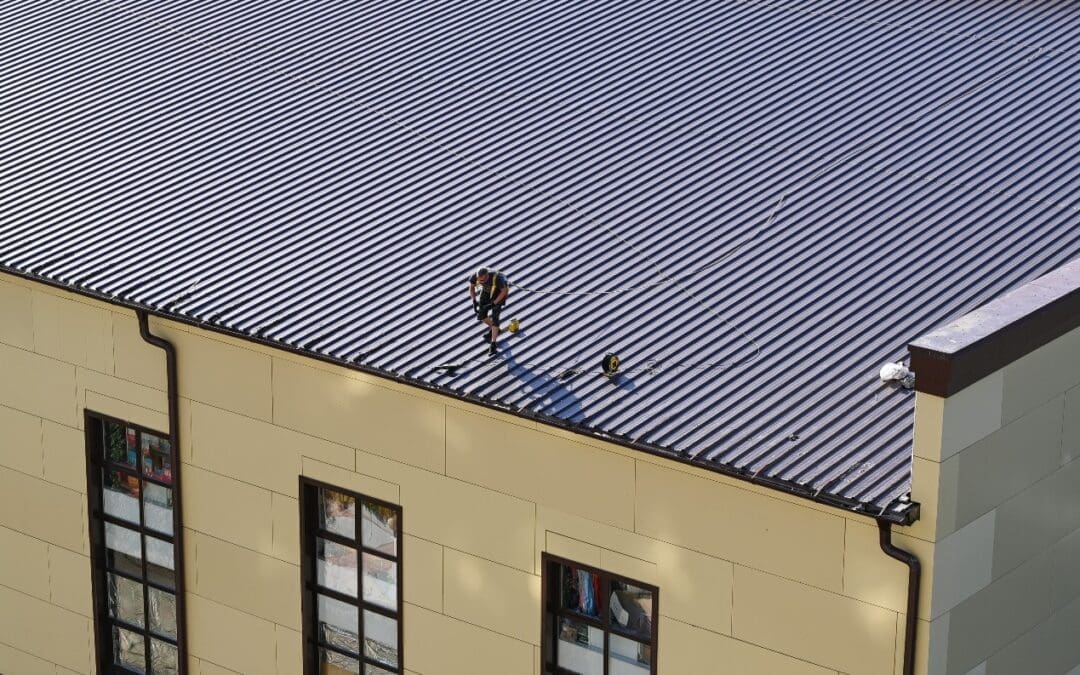
If you manage a commercial property in Florida, you have probably heard the old idea that metal roofs “pull” lightning in. It sounds believable, especially when summer storms roll in and lightning feels constant. But the reality is more practical than that, and understanding it can help you make calmer, smarter decisions about repairs, upgrades, or a future roof replacement.
In this post, we will explain what actually influences lightning strikes, what a metal roof does (and does not) do during a strike, and the top three reasons this myth keeps coming up.
Top 3 Facts About Metal Roofs and Lightning
The short version is that metal is a conductor, not a magnet. Where lightning lands is driven more by height, shape, and location than by roofing material.
If you want the practical takeaway, these are the factors that matter most:
1. Lightning strikes are driven by height and conditions, not by roof material
Lightning often strikes the most exposed point in an area, which usually means something tall, exposed, or isolated. That could be a tree, a tower, an edge of a building, or rooftop equipment. Whether the roof surface is metal, tile, or asphalt is not what determines where lightning goes. If your building is the highest point nearby, it can be at higher risk regardless of the roof type.
2. A metal roof can handle a strike better, but it is not a lightning protection system
Here is where people get confused. Metal does not attract lightning, but if lightning hits a building, metal can conduct electricity. That is not automatically a bad thing. A non-combustible roof surface is less likely to ignite than more combustible materials, and a continuous metal roof can help distribute energy across its surface rather than concentrating heat in one small point.
However, a metal roof alone does not “protect” a building from lightning damage. Proper lightning protection depends on a designed path that directs energy safely to ground, along with correct bonding and grounding. If a building needs true lightning protection, that is a separate system, not just a material choice.
3. The real risk is what lightning can do to systems inside the building
For commercial properties, the most disruptive damage is often electrical. Lightning-related surges can affect HVAC controls, security systems, network equipment, and other sensitive components. If your building has critical operations or valuable equipment, it is worth thinking beyond the roof surface and looking at surge protection, grounding, and whether a lightning protection system is appropriate for your site and exposure.
Planning a Commercial Roof Upgrade in Florida? Talk to Bringman Roofing
A roof decision is not just about materials. It is about how the whole building performs in Florida’s climate, including storms, wind exposure, and code requirements. Bringman Roofing helps commercial property owners understand their roof options clearly, including metal systems, coatings, and long-term maintenance planning.
If you are considering a repair, replacement, or an upgrade to a more durable commercial roofing system, contact our metal roofing experts for a straightforward inspection and guidance you can use to plan properly.
FAQs About Metal Roofs and Lightning
Does a metal roof increase the chance of a lightning strike?
No, a metal roof does not increase strike likelihood. Lightning is influenced more by a building’s height, exposure, and surrounding conditions than by the roofing material. A metal roof on a commercial building does not make that building any more likely to be struck than one with a shingle or membrane roof at the same elevation.
Is a metal roof safer than other roofing materials during a lightning storm?
In terms of fire risk, yes. Metal is non-combustible, so if a strike does occur, it disperses the electrical charge rather than concentrating heat at the point of impact. This is a meaningful advantage over materials like wood shakes or even asphalt shingles.
Should you install lightning rods on a building with a metal roof?
Sometimes, but it depends on the building’s risk profile, location, and what is inside the structure. Lightning protection systems are designed to safely route energy to ground and are separate from the roofing material itself.