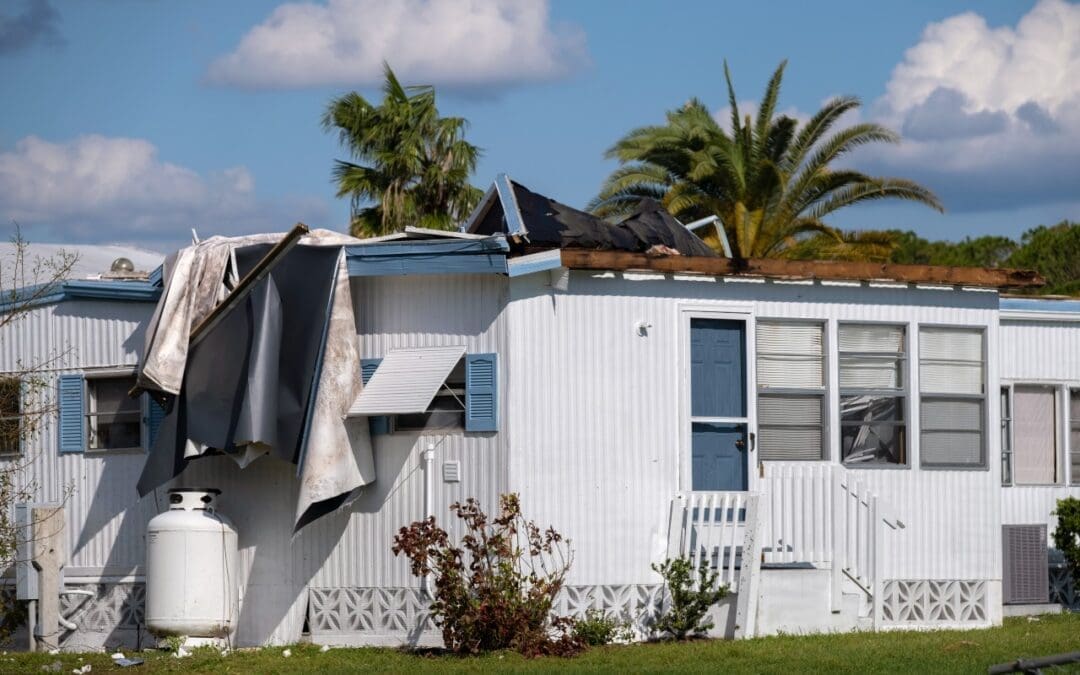
A storm rolls through Bradenton on an otherwise quiet afternoon. The wind shifts, the home flexes a little – something manufactured homes are designed to do – but the roof doesn’t sound as solid as it once did. Maybe it’s a faint flutter at the edges, maybe it’s a soft spot you’ve been ignoring, or maybe it’s the insurance notice reminding you that your roof no longer meets current wind guidelines. Whatever the trigger, the thought is the same: does this roof actually match what Florida weather demands?
Well, that concern isn’t misplaced. Mobile and manufactured homes in the US follow the HUD Code, which uses lighter framing and longer spans than site-built houses. Add Florida’s coastal wind exposure, salt air, low-slope roofs, and the occasional hail event, and small weaknesses in the roof system can grow into leaks, uplift, and premature deterioration. However, with a lightweight, wind-rated, sealed, and properly fastened roofing system, a mobile and manufactured home roof can perform extremely well in coastal Florida.
In this post, we’ll break down the roofing systems that actually work for Sarasota-Bradenton mobile homes, the Florida-specific requirements you can’t skip, and a practical homeowner checklist to help you choose the safest, smartest upgrade.
Material Considerations for Gulf Coast Climate
- TPO (Thermoplastic Polyolefin) Roofing: Dominates the manufactured home market. Single-ply membrane systems rated for 20-30 years offer excellent heat reflection and standing water resistance – critical for the low-slope or flat roofs common on older mobile homes. Hurricane-zone-approved systems can handle 160 mph wind loads when properly installed.
- Metal Roofing: Premium choice for pitched manufactured home roofs. Metal panels resist wind uplift, reflect intense Florida sun, and last 30+ years. Requires careful perimeter attachment and proper underlayment to prevent condensation issues in humid coastal air.
- Asphalt Shingles: Viable for newer manufactured homes with adequate pitch. Shingles must be Florida-approved and installed with six nails per shingle in high-wind areas. Impact-rated shingles are optional but beneficial. Lower upfront cost but shorter lifespan in salt air and UV exposure typical of Sarasota-Bradenton.
Underlayment & Code Compliance in Florida
Your roof covering is only as strong as the layer beneath it.
Florida requires a sealed roof deck during reroofing, which can be achieved through two ways:
- Full self-adhered membrane covering the entire deck
- Self-adhered joint strips over all seams plus a synthetic/felt anchor sheet
This secondary water barrier dramatically reduces interior damage if the roof covering is compromised during high winds.
Important: Not all manufactured homes have structural capacity for additional roof weight, particularly older pre-1980s models. This is why roof-over installations (adding new roofing over existing systems) require engineered approval.
Correctly classifying the project – roof-over vs. reroof – prevents delays and ensures your documentation is accepted by insurance carriers.
Cost & Insurance Factors
Expect $6-12 per square foot for quality manufactured home roof replacement, depending on material and complexity. Budget an additional 15-20% contingency for unexpected decking repairs discovered during tear-off.
Wind mitigation inspections documenting proper roof installation can significantly reduce insurance premiums, depending on carrier and coverage. Given Sarasota-Bradenton’s coastal location, this documentation often determines whether coverage is even available at reasonable rates.
Homeowner Checklist
Before engaging a local roofing contractor, you must:
- Verify roof-load limits: Verify the contractor understands HUD roof load limits and the unique structural constraints of manufactured homes.
- Check wind zone rating: Ensure replacement system meets Zone 2 or 3 specifications for your location
- Request decking inspection plan: Ask how they’ll assess and price potential structural repairs without attic access
- Confirm manufacturer certification: Particularly for TPO systems, installer certification affects warranty validity
- Document for wind mitigation: Require installation photos and engineer certifications needed for insurance discounts
Bringman Roofing specializes in manufactured home roofing throughout Manatee and Sarasota counties. Contact us today for inspection and honest evaluation of your roof’s condition, expected lifespan, and replacement options that meet HUD standards and Gulf Coast wind requirements.