
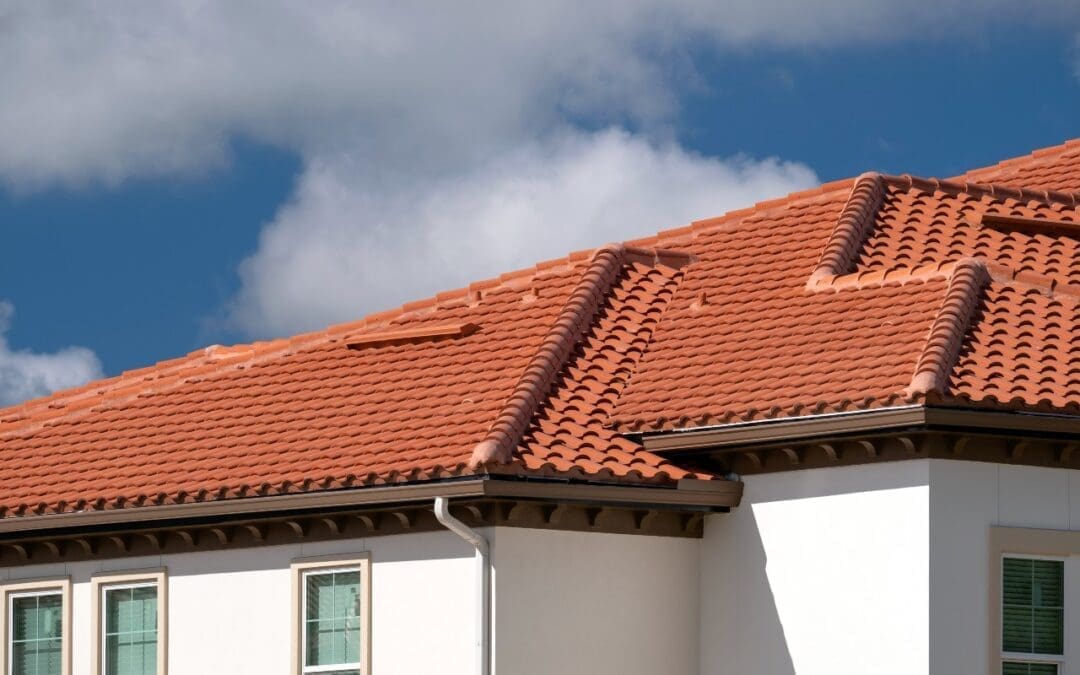
Tile roofing is common across Sarasota and Bradenton for good reason. It suits Florida homes, handles the heat well, and can last for decades when they are properly installed and cared for. But like any part of your home, they still need attention over time.
Sun, humidity, salt air, heavy rain, and storm debris can slowly crack tiles, loosen flashing, and wear down the underlayment beneath. The hard part is that small tile roof problems are not always easy to see from the ground. By the time you notice a ceiling stain or leak, the damage may already be spreading.
In this post, we will walk through five signs your tile roof may need repair and explain why calling a professional early can help you avoid a bigger, more stressful roofing problem later.
Five Signs Your Tile Roof Needs Repair
1. Cracked, Chipped, or Missing Tiles
Visible damage to the tiles themselves is the most straightforward sign, but it is easy to underestimate.
A hairline crack may look minor from the ground, but it creates a direct path for rainwater to reach the underlayment below. Once moisture gets under a tile, it does not stay contained. It travels, pools, and over time softens the wood deck beneath. Individual tiles can typically be replaced without disturbing the rest of the roof, but only if the problem is caught before the surrounding material is affected.
2. Tiles That Have Shifted or Are Sitting Unevenly
Tiles that have slipped out of position or appear to be sitting at an angle are a sign that the fasteners or the underlayment beneath them have weakened.
This is particularly common after a strong storm season. A shifted tile leaves a gap, and gaps allow both water and wind-driven debris to get underneath the roofline. In some cases, the tile itself is intact but sitting on a compromised base, which means replacing the tile without addressing what is beneath it will not hold.
3. Water Stains or Damp Spots on Interior Ceilings
If you are noticing discoloration on a ceiling or a soft, damp patch on drywall, the water is already inside. This does not necessarily mean the damage is catastrophic, but it does mean the roof has been compromised somewhere and the leak has been active long enough to reach your interior.
The tricky part with tile roofs is that the entry point and the visible stain are rarely in the same location, since water travels along rafters and decking before it drops. A professional inspection is needed to trace the source accurately.
4. Damaged or Deteriorating Flashing
Flashing is the metal sheeting that seals the joints around chimneys, vents, skylights, and roof edges. In Florida’s coastal environment, the salt air accelerates corrosion on metal components, and flashing that has started to lift, crack, or pull away from its seal is one of the more common entry points for water on an otherwise intact tile roof. It can be easy to overlook because the tiles around it may look fine. But failed flashing is a genuine leak risk, and resealing or replacing it is a repair job that a qualified roofer should handle.
5. Algae, Moss, or Visible Biological Growth
Florida’s humidity creates favorable conditions for algae and moss to take hold on tile surfaces. Some growth is cosmetic, but when moss or lichen penetrates the tile surface or accumulates in the joints between tiles, it traps moisture and accelerates surface degradation. Left unchecked, biological growth can compromise the integrity of both the tile and the underlayment over time.
If you see dark streaking, green patches, or any visible growth spreading across sections of your roof, it is worth having a roofer assess how deep the issue goes.
How a Tile Roof Repair Expert Can Help
Tile roofing repairs are not the same as working on asphalt shingles. The material is heavier, the installation system is more involved, and matching replacement tiles to an existing roof requires experience and access to the right suppliers. Walking an older tile roof incorrectly can crack tiles that were otherwise undamaged. These are the reasons it matters who you call.
At Bringman Roofing, we work with homeowners across Sarasota and Bradenton on tile roof repairs of all scopes, from replacing a handful of broken tiles after a storm to addressing underlayment failures that have developed over several seasons. If your roof is showing any of the signs above, the right step is to have it looked at before the next storm season adds more pressure to an already compromised system.
Contact our tile roof repair experts today to learn more about how we approach this work, or reach out directly to schedule an inspection.
Frequently Asked Questions About Tile Roof Repair in Florida
How long does a tile roof last in Florida?
Clay tile roofs in Florida can often last 40 years or more, while concrete tile roofs commonly perform well for 30 to 40 years with proper installation and maintenance. However, the underlayment beneath the tiles may need attention sooner, often within 20 to 30 years, even when the tiles still look intact.
Can a few broken roof tiles be repaired?
Yes, isolated tile damage can often be repaired if the underlayment and roof deck are still in good condition. A professional inspection can confirm whether repair is enough or whether deeper work is needed.
At what point does a tile roof need full replacement rather than repair?
Repairs make sense when damage is localized and the underlying structure of the roof, including the deck and underlayment, is still in good condition.
However, if the underlayment has deteriorated across a large portion of the roof, or if the roof is approaching the end of its functional lifespan and showing widespread tile degradation, a full replacement is often the more cost-effective path. A professional inspection is the most reliable way to assess which situation you are dealing with.