As a business owner, you already juggle staff, operations, compliance, equipment, and the day-to-day responsibilities that keep your doors open. A leaking roof is not just an inconvenience – it can interrupt work, threaten inventory, and create safety concerns for your team and customers.
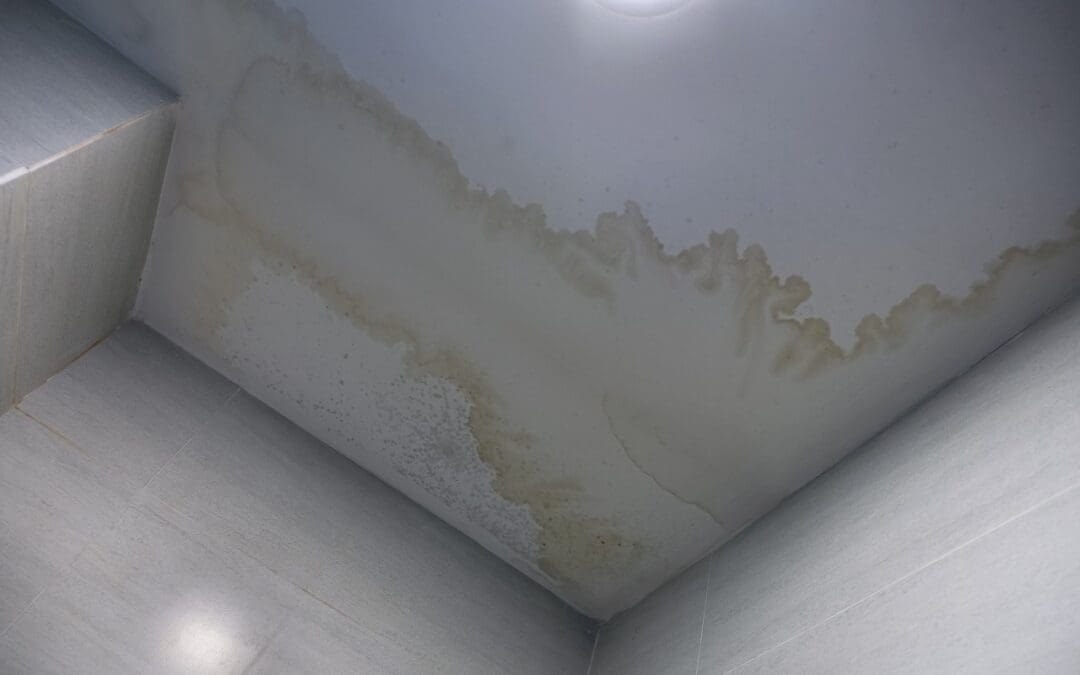
What makes commercial roof leaks challenging is that they rarely appear overnight. Most begin as small weaknesses that go unnoticed until the signs become hard to ignore. If you’re seeing stains, musty odors, or repeated moisture spots, it may be time to consider a repair or even a replacement.
However, before you call a local roofing contractor, it helps to understand why leaks usually happen in commercial buildings. In this post, we will walk through the top three causes of commercial roof leaks in Florida and help you make sense of what might be developing on your own roof.
Top 3 Reasons for Leaks in Commercial Roofs
Most leaks start at locations that face more stress, movement, or weather pressure than the rest of the roof. Understanding these areas helps you stay ahead of bigger issues:
1. Roof Penetrations and Failing Flashing
Commercial roofs almost always include penetrations like HVAC units, vents, plumbing lines, exhaust fans, and electrical conduits. Each one requires flashing to seal the transition between the membrane and the equipment.
In Florida, these areas wear faster because of extreme sunlight, temperature swings, and wind uplift. Flashing can crack, pull away, or lose adhesion over time. Once the seal is compromised, water enters slowly and often travels horizontally across insulation layers, which is why interior leaks do not always match the source on the roof.
2. Ponding Water and Drainage Problems
Flat or low-slope roofs depend heavily on drainage. Even a small low spot can collect rainwater for days, especially during Florida’s wet season.
Ponding water creates two problems:
- It accelerates membrane breakdown through constant UV exposure and pressure.
- It increases stress on seams, drains, and edges, making them more vulnerable during storms.
If water remains more than 48 hours after rainfall, the issue should be assessed. In many cases, poor drainage is an early warning sign of structural settlement or failing insulation layers.
3. Aging Membranes and Surface Wear
Commercial membranes such as TPO, PVC, EPDM, and modified bitumen all weaken over time. Florida’s sun and humidity speed up this aging process. As the roof gets older, seams loosen, coatings thin out, and the membrane becomes less flexible, making it easier for cracks and pinholes to form.
Trust Bringman Roofing to Fix Your Leaking Roof
At Bringman Roofing, we understand how much is at stake when you run a business. A dependable roof protects your operations, your investments, and the people who walk through your doors. Our team focuses on practical, code-aligned, long-lasting solutions that make sense for Florida’s climate and the real conditions your building faces.
If you want a clear, honest evaluation of your commercial roof, schedule an inspection with our qualified roofing specialists today. We’re here to help you protect your building with straightforward guidance and reliable workmanship.
FAQs About Commercial Roofing in Florida
What are the common signs of damage in commercial roofs?
- Water marks, damp odors, or ceiling stains inside the building
- Standing water that does not drain within 48 hours
- Cracking or separation around flashing and penetrations
- Visible splitting, bubbling, or lifted seams on the membrane
How is commercial roofing different from residential roofing?
Commercial roofs are usually designed as low-slope systems with wide membrane surfaces. They must support heavy equipment such as HVAC systems and allow safe foot traffic for maintenance teams.
Residential roofs, by contrast, are steep-slope and rely on shingles or tile to shed water quickly. Because the structures and materials differ, the installation standards and long-term maintenance strategies differ as well.
How to find reliable commercial roofing experts near me?
Finding the right contractor comes down to experience, transparency, and proof of consistent work. You can use the following checks before choosing a commercial roofer:
- Choose a contractor who specializes in commercial roofing
- Check online reviews and recent project photos for proof of consistent quality.
- Confirm licensing, insurance, and manufacturer certifications for membrane systems.
- Ask for a clear written inspection report so you understand the roof’s condition.
These small steps make it much easier to find a commercial roofing company in Bradenton and nearby areas that you can trust over the long term.